South Sudan is one of the poorest countries in the world. Most villages in the country have no electricity or running water, and the country's overall infrastructure is lacking with few paved roads anywhere in the country.[2]
Economy of South Sudan
The economy of South Sudan
is one of the world's weakest and most underdeveloped, with South Sudan
having little existing infrastructure and the highest maternal
mortality and female illiteracy rates in the world as of 2011.[2]
South Sudan is one of the poorest countries in the world. Most villages in the country have no electricity or running water, and the country's overall infrastructure is lacking with few paved roads anywhere in the country.[2]
South Sudan is one of the poorest countries in the world. Most villages in the country have no electricity or running water, and the country's overall infrastructure is lacking with few paved roads anywhere in the country.[2]
Economy of Somalia
According to the CIA and the Central Bank of Somalia, despite experiencing civil unrest, Somalia has maintained a healthy informal economy, based mainly on livestock, remittance/money transfer companies and telecommunications.[3][4] Due to a dearth of formal government statistics and the recent civil war, it is difficult to gauge the size or growth of the economy. For 1994, the CIA estimated the GDP at $3.3 billion.[5] In 2001, it was estimated to be $4.1 billion.[6] By 2009, the CIA estimated that the GDP had grown to $5.731 billion, with a projected real growth rate of 2.6%.[3] According to a 2007 British Chambers of Commerce
report, the private sector also grew, particularly in the service
sector. Unlike the pre-civil war period when most services and the
industrial sector were government-run, there has been substantial,
albeit unmeasured, private investment in commercial activities; this has
been largely financed by the Somali diaspora, and includes trade and marketing, money transfer services, transportation, communications, fishery equipment, airlines, telecommunications, education, health, construction and hotels.[7] Libertarian economist Peter T. Leeson attributes this increased economic activity to the Somali customary law (referred to as Xeer), which he suggests provides a stable environment to conduct business in.[8]
Economy of Burundi
Burundi is a landlocked, resource-poor country with an underdeveloped manufacturing sector. The mainstay of the Burundian economy is agriculture, accounting for 54% of GDP
in 1997. Agriculture supports more than 70% of the labour force, the
majority of whom are subsistence farmers. Although Burundi is
potentially self-sufficient in food production, the ongoing civil war, overpopulation, and soil erosion have contributed to the contraction of the subsistence economy by 25% in recent years. Large numbers of internally displaced persons
have been unable to produce their own food and are largely dependent on
international humanitarian assistance. Burundi is a net food importer,
with food accounting for 17% of imports in 1997.
Economy of Rwanda
Rwanda is a rural country with about 90% of the population engaged in
(mainly subsistence) agriculture. It is the most densely populated
country in Africa; is landlocked; and has few natural resources and
minimal industry. Primary exports are coffee and tea. By 1994, farm
size, on average, was smaller than one hectare, while population density
was more than 450 persons per square kilometer of arable land.
The Rwandan economy is based on the largely rain-fed agricultural production of small, semi-subsistence, and increasingly fragmented farms. It has few natural resources to exploit and a small, noncompetitive industrial sector. While the production of coffee and tea is well-suited to the small farms, steep slopes, and cool climates of Rwanda and has ensured access to foreign exchange over the years, farm size continues to decrease.
The Rwandan economy is based on the largely rain-fed agricultural production of small, semi-subsistence, and increasingly fragmented farms. It has few natural resources to exploit and a small, noncompetitive industrial sector. While the production of coffee and tea is well-suited to the small farms, steep slopes, and cool climates of Rwanda and has ensured access to foreign exchange over the years, farm size continues to decrease.
Economy of Uganda
Endowed with significant natural resources, including ample fertile
land, regular rainfall, and mineral deposits, it is thought that Uganda could feed all of Africa if it were commercially farmed.[7] The economy of Uganda has great potential, and it appeared poised for rapid economic growth and development.
Chronic political instability and erratic economic management since self-rule has produced a record of persistent economic decline that has left Uganda among the world's poorest and least-developed countries. The national energy needs have historically been more than domestic energy generation, though large petroleum reserves have been found in the west.
After the turmoil of the Amin period, the country began a program of economic recovery in 1981 that received considerable foreign assistance. From mid-1984 onward, overly expansionist fiscal and monetary policies and the renewed outbreak of civil strife led to a setback in economic performance.
Chronic political instability and erratic economic management since self-rule has produced a record of persistent economic decline that has left Uganda among the world's poorest and least-developed countries. The national energy needs have historically been more than domestic energy generation, though large petroleum reserves have been found in the west.
After the turmoil of the Amin period, the country began a program of economic recovery in 1981 that received considerable foreign assistance. From mid-1984 onward, overly expansionist fiscal and monetary policies and the renewed outbreak of civil strife led to a setback in economic performance.
Economy of Tanzania
The United Republic of Tanzania is the second largest economy in the East African Community and the twelfth largest in Africa. The country is largely dependent on agriculture for employment, accounting for about half of the employed workforce.[3]:page 56 An estimated 34 percent of Tanzanians currently live in poverty.[13]
The economy has been transitioning from a command economy to a market
economy since 1985. Although total GDP has increased since these reforms
began, GDP per capita dropped sharply at first, and only exceeded the
pre-transition figure in around 2007.[14]
Following the rebasing of the economy in 2014, the GDP expand by a third to $41.33 billion.[15]
Following the rebasing of the economy in 2014, the GDP expand by a third to $41.33 billion.[15]
Economy of Kenya
Kenya's economy is market-based,
with a few state-owned infrastructure enterprises, and maintains a
liberalised external trade system. The country is generally perceived as
Eastern and central Africa's hub for Financial, Communication and
Transportation services. As of March 2014, economic prospects are
positive with above 5% GDP growth expected,[8]
largely because of expansions in tourism, telecommunications,
transport, construction and a recovery in agriculture. These
improvements are supported by a large pool of English-speaking
professional workers. There is a high level of computer literacy,
especially among the youth.
The government, generally perceived as investment friendly, has enacted several regulatory reforms to simplify both foreign and local investment, with the most important of these being the creation of an export processing zone. According to Healy Consultants, the export processing zone is expected to grow rapidly through input of foreign direct investment over the next decade. An increasingly significant portion of Kenya's foreign inflows is from remittances by non-resident Kenyans who work in the US, Middle East, Europe and Asia.[9] Compared to its neighbours, Kenya has a well-developed social and physical infrastructure. It is considered the main alternative location to South Africa for major corporations seeking entry into the African continent.
The government, generally perceived as investment friendly, has enacted several regulatory reforms to simplify both foreign and local investment, with the most important of these being the creation of an export processing zone. According to Healy Consultants, the export processing zone is expected to grow rapidly through input of foreign direct investment over the next decade. An increasingly significant portion of Kenya's foreign inflows is from remittances by non-resident Kenyans who work in the US, Middle East, Europe and Asia.[9] Compared to its neighbours, Kenya has a well-developed social and physical infrastructure. It is considered the main alternative location to South Africa for major corporations seeking entry into the African continent.
Visa-free travel for expats in East Africa: Fantasy or reality?
Waturi Wa Matu, the Coordinator of the East African Tourism Platform, the region’s private sector body connected to the East African Community, has given the thumbs up from Juba, where the latest meeting of the Northern Corridor Integration Project took place over the past two days.
There were a number of controversial issues which had made their way on to the agenda, prompting finger pointing and cross-table accusations over delays, obstacles, and obstructions. Waturi then aptly posted on her Facebook page: “Partner States carpeting each other on failure to deliver on Heads of State directives...”
There was, however, progress, and upon repeated questions and answers going back and forth between Kampala and Juba, it emerged that the visa-free travel for duly registered expatriates holding work permits, or residents holding residency permits, will after all become effective on February 15, two months after it was supposed to come into effect. Said Waturi in her last communication before heading for the formal dinner hosted by the government of South Sudan for the delegates: “Just go with this - foreign residents visa fees to KE, RW, and UG waived for foreign residents from these partner states. They will receive interstate passes at [the] departure airport upon presentation of [a] valid permit. Kenya to implement by 15th Feb...”
It should be pointed out, however, that this arrangement only applies at present to Uganda, Rwanda, and Kenya - countries which have subscribed to the common tourist visa and implemented travel arrangements for citizens of the three countries to cross the respective borders using only an ID, or in the case of Uganda, a voters’ card. South Sudan, which is not part of the joint tourist visa initiative, as well as Tanzania and Burundi, the other two members of the East African Community, first need to sign up to this before these other measures can fall into place.
Reaction from two hoteliers at the coast was swift as they expressed hope that the waiving of visa fees for duly-registered expatriates will boost travel from Uganda and Rwanda to the Kenya coast and help fill empty hotel beds. “If a family of four can save 200 US dollars in visa fees that is money they can spend directly into our economy. It will hopefully draw traffic away from the Gulf or South Africa - places this target group has favored in the past, because they needed no visa to go there. What is now needed are more flights from Kigali to Mombasa and direct flights again from Entebbe to Mombasa. Travel agents can then package offers and tariffs at the coast right now [which] are very, very low. This should be a big inducement for potential travelers to spend weekends or short vacations at our beaches.”
This correspondent, repeatedly in the past faced with visa requirements and payment when traveling to Kenya and Rwanda since the announcement was first made in December, will monitor progress and report either full implementation or else the ongoing failure to turn the Head of State directives into action.
There were a number of controversial issues which had made their way on to the agenda, prompting finger pointing and cross-table accusations over delays, obstacles, and obstructions. Waturi then aptly posted on her Facebook page: “Partner States carpeting each other on failure to deliver on Heads of State directives...”
There was, however, progress, and upon repeated questions and answers going back and forth between Kampala and Juba, it emerged that the visa-free travel for duly registered expatriates holding work permits, or residents holding residency permits, will after all become effective on February 15, two months after it was supposed to come into effect. Said Waturi in her last communication before heading for the formal dinner hosted by the government of South Sudan for the delegates: “Just go with this - foreign residents visa fees to KE, RW, and UG waived for foreign residents from these partner states. They will receive interstate passes at [the] departure airport upon presentation of [a] valid permit. Kenya to implement by 15th Feb...”
It should be pointed out, however, that this arrangement only applies at present to Uganda, Rwanda, and Kenya - countries which have subscribed to the common tourist visa and implemented travel arrangements for citizens of the three countries to cross the respective borders using only an ID, or in the case of Uganda, a voters’ card. South Sudan, which is not part of the joint tourist visa initiative, as well as Tanzania and Burundi, the other two members of the East African Community, first need to sign up to this before these other measures can fall into place.
Reaction from two hoteliers at the coast was swift as they expressed hope that the waiving of visa fees for duly-registered expatriates will boost travel from Uganda and Rwanda to the Kenya coast and help fill empty hotel beds. “If a family of four can save 200 US dollars in visa fees that is money they can spend directly into our economy. It will hopefully draw traffic away from the Gulf or South Africa - places this target group has favored in the past, because they needed no visa to go there. What is now needed are more flights from Kigali to Mombasa and direct flights again from Entebbe to Mombasa. Travel agents can then package offers and tariffs at the coast right now [which] are very, very low. This should be a big inducement for potential travelers to spend weekends or short vacations at our beaches.”
This correspondent, repeatedly in the past faced with visa requirements and payment when traveling to Kenya and Rwanda since the announcement was first made in December, will monitor progress and report either full implementation or else the ongoing failure to turn the Head of State directives into action.
Will Nibigira’s departure return Burundi tourism to slumberland again?
When Carmen Nibigira was appointed to the position of Director General of the Burundi Tourism Office, a breath of fresh air took hold almost immediately, and suddenly there was a buzz about Burundi in the wider region, and regular tourism observers took notice. Coming home from a successful ITB, where the Burundi Tourism stand was runner up in the race for “Best African Exhibitor,” the country’s fledgling tourism industry took hope that they too would soon join their more successful partners in the East African Community in making tourism a growth industry and tapping into tourist dollars and euros.
Carmen, back then, merely just over half a year ago, went on record saying: “I am humbled by the new opportunity given to me and the new team at the National Tourism Office of Burundi. It is my belief that with sustained efforts towards achieving a common goal and working harmoniously as a team that we will be able to achieve more for Burundi - to attract more tourists, more investments, and change the image of the country locally, regionally, and internationally. Our commitment is to work with both the public and private sector in Burundi to first and foremost help re-brand our country as a favorable tourism and investment destination that should be the pride of all Burundians.” Her optimism was not misplaced as a series of activities unfolded, putting the spotlight on Bujumbura and Burundi, which she progressively transformed into East Africa’s culinary and art center, with sporting events thrown in for good measure.
In a communication to this correspondent, Carmen made the direction of the “new” Burundi Tourism office known when she set the yardstick higher:
“Regional cooperation:
“We also seek to learn and work closely with our counterparts within the East African region and our message to them is simple. Burundi is part and parcel of the East African Community. We remain committed to working together with our counterparts in the region to ensure that tourism in East Africa is continually developing and…
Come and make your unique experience in Burundi and share it, adding value to the regional economies and improving the lives of our people while at the same time giving visitors to this region a whole new experience. It is in this spirit of regional cooperation that saw Burundi take part in last year’s Magical Kenya Travel Expo in Nairobi, Kenya, and we reiterate our commitment to continue working with regional tourism bodies to better our tourism offering across the region. We want to complement the existing tourism offerings from the region and in the process, develop a product that is unique to this destination.”
Related to the single tourist visa, Burundi has taken the following position:
“East African Tourist Visa:
We laud our Kenyan, Ugandan and Rwandan counterparts for the recently-launched single tourism visa for East Africa. We think that this is a huge first step towards joint marketing campaigns for East Africa and will go a long way into helping market East Africa as a single tourism destination. Burundi is committed to making this happen, and we will be joining the single tourism regime as soon as we are able to meet some set guidelines and requirements. Looking ahead into 2014, we want this to be the year that Burundi fully embraces itself and walks out of the dark shadows of the past. We have seen an increased investment in the tourism sector in Burundi that has mainly been driven by local investors who have shown a strong sense of belief in the tourism prospects for Burundi. We do not take this for granted and that is why we are currently embarking on a tourism inventory process that will see us identify and develop our tourism product so that it first attracts the Burundian people and the expatriate community resident in Burundi and then going further to attract the regional and international community to Burundi. But that should not stop you from coming to Burundi; we welcome you with open arms and hope you get to share with your friends, family and the entire world your own unique Burundian experience.”
At the same time, Burundi launched a new magazine, aptly titled “Beautiful Burundi 2014,” which over the space of 88 pages gives the hitherto most comprehensive information and updates about tourism attractions and opportunities in the country, again a sharp contrast from past days when Burundi kept her sunny sides hidden in almost obscurity. Anything from culture to art, from music to fashion, adventures and natural attractions are covered, with the general economy and other country specific topics also receiving ample exposure.
A few months down the line though, Carmen returned to the United States to complete her pending studies, while back home changes in the tourism portfolio at the cabinet level had taken place.
It was soon becoming clear that the new minister, brought in after a cabinet reshuffle, when the former office holder together with other colleagues belonging to a coalition party had resigned over differences in the direction the country was taking, did not apparently share the enthusiasm and new direction Carmen had injected into the Burundi Tourism office, and things went along regardless, sort of anyway, until news reached last night of a major change.
Though no specifics were available as the core of the message leaves no doubt – Carmen Nibigira will be leaving Burundi Tourism. The fact that the message reached this correspondent who is on a fact-finding mission deep in the Selous Game Reserve, gave it the importance it deserved, and questions are abounding now about Carmen’s personal future and the future of the Burundi Tourism office, which has in recent weeks once again descended into the hibernation they were for too long notorious for.
Carmen, back then, merely just over half a year ago, went on record saying: “I am humbled by the new opportunity given to me and the new team at the National Tourism Office of Burundi. It is my belief that with sustained efforts towards achieving a common goal and working harmoniously as a team that we will be able to achieve more for Burundi - to attract more tourists, more investments, and change the image of the country locally, regionally, and internationally. Our commitment is to work with both the public and private sector in Burundi to first and foremost help re-brand our country as a favorable tourism and investment destination that should be the pride of all Burundians.” Her optimism was not misplaced as a series of activities unfolded, putting the spotlight on Bujumbura and Burundi, which she progressively transformed into East Africa’s culinary and art center, with sporting events thrown in for good measure.
In a communication to this correspondent, Carmen made the direction of the “new” Burundi Tourism office known when she set the yardstick higher:
“Regional cooperation:
“We also seek to learn and work closely with our counterparts within the East African region and our message to them is simple. Burundi is part and parcel of the East African Community. We remain committed to working together with our counterparts in the region to ensure that tourism in East Africa is continually developing and…
Come and make your unique experience in Burundi and share it, adding value to the regional economies and improving the lives of our people while at the same time giving visitors to this region a whole new experience. It is in this spirit of regional cooperation that saw Burundi take part in last year’s Magical Kenya Travel Expo in Nairobi, Kenya, and we reiterate our commitment to continue working with regional tourism bodies to better our tourism offering across the region. We want to complement the existing tourism offerings from the region and in the process, develop a product that is unique to this destination.”
Related to the single tourist visa, Burundi has taken the following position:
“East African Tourist Visa:
We laud our Kenyan, Ugandan and Rwandan counterparts for the recently-launched single tourism visa for East Africa. We think that this is a huge first step towards joint marketing campaigns for East Africa and will go a long way into helping market East Africa as a single tourism destination. Burundi is committed to making this happen, and we will be joining the single tourism regime as soon as we are able to meet some set guidelines and requirements. Looking ahead into 2014, we want this to be the year that Burundi fully embraces itself and walks out of the dark shadows of the past. We have seen an increased investment in the tourism sector in Burundi that has mainly been driven by local investors who have shown a strong sense of belief in the tourism prospects for Burundi. We do not take this for granted and that is why we are currently embarking on a tourism inventory process that will see us identify and develop our tourism product so that it first attracts the Burundian people and the expatriate community resident in Burundi and then going further to attract the regional and international community to Burundi. But that should not stop you from coming to Burundi; we welcome you with open arms and hope you get to share with your friends, family and the entire world your own unique Burundian experience.”
At the same time, Burundi launched a new magazine, aptly titled “Beautiful Burundi 2014,” which over the space of 88 pages gives the hitherto most comprehensive information and updates about tourism attractions and opportunities in the country, again a sharp contrast from past days when Burundi kept her sunny sides hidden in almost obscurity. Anything from culture to art, from music to fashion, adventures and natural attractions are covered, with the general economy and other country specific topics also receiving ample exposure.
A few months down the line though, Carmen returned to the United States to complete her pending studies, while back home changes in the tourism portfolio at the cabinet level had taken place.
It was soon becoming clear that the new minister, brought in after a cabinet reshuffle, when the former office holder together with other colleagues belonging to a coalition party had resigned over differences in the direction the country was taking, did not apparently share the enthusiasm and new direction Carmen had injected into the Burundi Tourism office, and things went along regardless, sort of anyway, until news reached last night of a major change.
Though no specifics were available as the core of the message leaves no doubt – Carmen Nibigira will be leaving Burundi Tourism. The fact that the message reached this correspondent who is on a fact-finding mission deep in the Selous Game Reserve, gave it the importance it deserved, and questions are abounding now about Carmen’s personal future and the future of the Burundi Tourism office, which has in recent weeks once again descended into the hibernation they were for too long notorious for.
Tanzania seeks to be Africa’s tourism hub
Tanzania’s tourism revenues could increase fourfold in the next 10 years and also create more jobs, this is according to the World Bank.

Tanzania’s tourism revenues could increase fourfold in the next 10 years and also create more jobs, this is according to the World Bank.
The industry could generate 16 billion US dollars by 2025 up from 4.48 billion US dollars, the bank revealed in its report, ‘Unlocking the Potential of the Tourism Industry for Tanzanians.’
According to the World Bank, for the East African country to achieve this tremendous growth, the government should focus on streamlining its system of taxes and fees as well as make its revenue allocations ‘more transparent’.
“This target is indeed achievable but only if there is a change in policies and mindsets among all stakeholders,” Jacques Morisset, World Bank Lead Economist said in a statement
Philippe Dongier, Country Director for Tanzania, Burundi and Uganda said, “There is potential for further growth as also emphasized by the Government; and some of the needed reforms are quite urgent as the status quo could be costly for the country.”
(READ MORE: One visa for East African travel)
The government is already on track to re-brand the country as Africa’s leading tourist and business destination. The country has set aside 1.5 million US dollars in a bid to revive the sector through advertorials in local and international media houses promoting the country’s scenic tourism destinations.
According to one of Tanzania’s local dailies CNN and BBC will be tasked to air the advertorials worldwide and are optimistic this will boost tourist arrivals. Tanzania is looking to double its tourist numbers to 2.5 million annually.
“There is no doubt Tanzania is in a good place with tourism and yet could do considerably better. Tanzania has abundant natural tourism attractions and is well recognized internationally including,” Dongier said.
“The country received one million visitors in 2013 bringing in 1.5 billion US dollars in foreign exchange earnings, which is remarkable by any account.”
The sector is reported to employ about half a million people. With this in mind, the World Bank has encouraged Tanzania to diversify its tourism activities in other parts of the country as well as develop these sites. Currently, Arusha and Zanzibar account for more than three quarter of tourism activities.
“The report recommends realizing other opportunities, especially in the South, and developing attractions and activities that cater to tourists on more modest travel budgets, including more local and regional visitors,” the bank said.
Tanzania’s tourism revenues could increase fourfold in the next 10 years and also create more jobs, this is according to the World Bank.
The industry could generate 16 billion US dollars by 2025 up from 4.48 billion US dollars, the bank revealed in its report, ‘Unlocking the Potential of the Tourism Industry for Tanzanians.’
According to the World Bank, for the East African country to achieve this tremendous growth, the government should focus on streamlining its system of taxes and fees as well as make its revenue allocations ‘more transparent’.
“This target is indeed achievable but only if there is a change in policies and mindsets among all stakeholders,” Jacques Morisset, World Bank Lead Economist said in a statement
Philippe Dongier, Country Director for Tanzania, Burundi and Uganda said, “There is potential for further growth as also emphasized by the Government; and some of the needed reforms are quite urgent as the status quo could be costly for the country.”
(READ MORE: One visa for East African travel)
The government is already on track to re-brand the country as Africa’s leading tourist and business destination. The country has set aside 1.5 million US dollars in a bid to revive the sector through advertorials in local and international media houses promoting the country’s scenic tourism destinations.
According to one of Tanzania’s local dailies CNN and BBC will be tasked to air the advertorials worldwide and are optimistic this will boost tourist arrivals. Tanzania is looking to double its tourist numbers to 2.5 million annually.
“There is no doubt Tanzania is in a good place with tourism and yet could do considerably better. Tanzania has abundant natural tourism attractions and is well recognized internationally including,” Dongier said.
“The country received one million visitors in 2013 bringing in 1.5 billion US dollars in foreign exchange earnings, which is remarkable by any account.”
The sector is reported to employ about half a million people. With this in mind, the World Bank has encouraged Tanzania to diversify its tourism activities in other parts of the country as well as develop these sites. Currently, Arusha and Zanzibar account for more than three quarter of tourism activities.
“The report recommends realizing other opportunities, especially in the South, and developing attractions and activities that cater to tourists on more modest travel budgets, including more local and regional visitors,” the bank said.
Home » Tourism » Tanzania’s Tourism Revenue could hit $16 billion by 2025 Tanzania’s Tourism Revenue could hit $16 billion by 2025
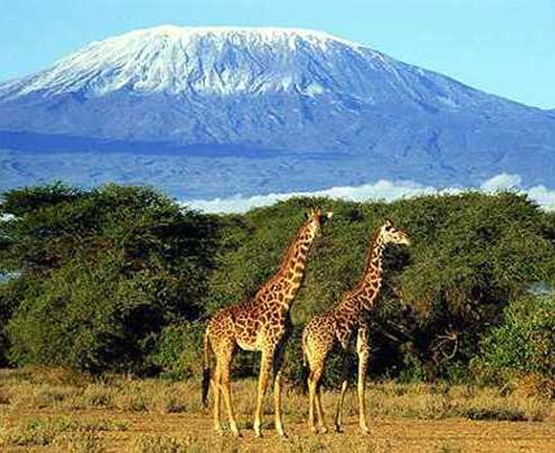
DAR ES SALAAM, Tanzania – The World Bank has said Tanzania’s tourism revenues could bulge four times from $4.48 billion in 2013 to $16 billion annually by 2025 if share benefits from the industry are equitably and evenly distributed to local participation but with quality.
Jacques Morisset, the World Bank Lead Economist said tourism is considered to be a high priority under President Jakaya Kikwete’s development agenda, as well as that of the National Business Council.
He said the industry has the goal is to multiply by eight the revenues from tourism by 2025 or to double the sector’s annual growth rate observed in recent years.
“This target is indeed achievable but only if there is a change in policies and mindsets among all stakeholders,” said Jacques Morisset, World Bank Lead Economist the author of a the 6th Tanzania Economic Update report christened Unlocking the potential of the tourism industry for Tanzanians.
“To realize this opportunity, the government should simplify its system of taxes and fees and make its revenue allocations more transparent as there is no doubt Tanzania is in a good place with tourism and yet could do considerably better well recognized internationally,” Philippe Dongier, the Country Director for Tanzania, Burundi and Uganda said last week.
Tourism is already a major contributor to Tanzania’s economy, however, as the latest Tanzania Economic Update published by the World Bank argues, this strategic industry can grow and create more high-paying jobs, and closer linkages with businesses and local communities.
Dongier said the country received one million visitors in 2013 bringing in $1.5 billion in foreign exchange earnings. He said this is remarkable by any account. But there is potential for further growth after some much needed reforms are implemented.
According to Dongier, tourism directly employs close to half a million Tanzanians and contributes to almost 20% of total exports, represents approximately 3.4% of Tanzania’s total GDP but the level could reach an estimated 10% when considering its indirect impacts on other areas such as agriculture and transportation.
The latest update proposes three strategic directions. The first is to diversify tourism activities from the current emphasis on high end tourism in the north around Arusha and Zanzibar where up to 90% of tourism activities are currently concentrated.
According to Morisset the report recommends realizing other opportunities, especially in the South, and developing attractions and activities that cater to tourists on more modest travel budgets, including more local and regional visitors.
The second direction is to further integrate local communities and small operators into tourism activities, through benefit-sharing processes while such efforts already exist in Tanzania, they are still at a small scale and have had limited impact on the ground.
According to the report that was launched last week in Dar es Salaam, best practices where training and linkages programs developed jointly by the private and public sectors have brought about higher quality standards while also increasing the participation of the local business community and workers in tourism activities.
Apart from the discussion of Tanzania’s tourism as the special focus of this edition of the Tanzania Economic Update, the publication analyses the state of the economy. The recent rebasing of the GDP and the latest household budget survey have challenged the traditional view of the Tanzanian economy.
The country’s income per capita, at $ 950, is now closer than before to reaching middle income status and the poverty rate declined from 33 percent 2007 to 28 percent in 2012. Meanwhile, the economy continued to expand by around seven percent in 2014 with controlled inflation averaging five percent.
“The main vulnerability of Tanzania’s macroeconomic management remains its fiscal policy, and it is imperative for the Government to rectify this situation,” says Morisset.
While the Government appears ready to take the necessary actions to address these risks, the report warns there is no room for complacency when the country is gearing up for a national referendum in April 2015 on the proposed new constitution and general elections in October 2015.
Tanzania: State Earns Billions From Tourism Hunting
By Alvar Mwakyusa and Christopher Majaliwa
Dodoma — TANZANIA earned about 18 million US dollars through tourism hunting between 2009/2010 and 2013/2014, the Ministry of Tourism and Natural Resources said on Friday.
Speaking before the National Assembly on behalf of the ministry, Finance Deputy Minister, Mr Mwigulu Nchemba, noted that tourism hunting greatly contributed to the national economic growth.
Due to its enormous contribution to the national economy, the government has no plans to stop tourism hunting but instead will put much efforts into making it more sustainable.
Mr Nchemba was responding to a question by Mr Suleiman Nchambi (Kishapu- CCM), who had claimed that poaching, which has been on the increase in the country, is also caused by tourism hunting.
"Poaching is rampant in the country. Why doesn't the government see it wise now to ban tourism hunting for at least 10 years as it once did some years back?" the lawmaker asked. Mr Nchemba said that Tanzania Wildlife Research Institute (TAWIRI) played a role in identifying hunting blocks and tourism hunting is being overseen by the ministry's Wildlife Department.
"This activity is being carried out in accordance with the Wildlife Act No. 5 of 2009 and tourism hunting guidelines of 2010," he said, adding that animals that are being targeted are those that have been allowed by TAWIRI.
He said that despite bringing in foreign exchange, tourism hunting was also one of the important means of curbing unemployment in the country.
He noted that about 3,700 Tanzanians were employed in the tourism hunting sub-sector. Mr Nchemba affirmed that the activity also helped in infrastructure development as there were road network improvements in the areas where hunting takes place.
"There are also a number tourists lodges built in these areas but also help in beefing up security in the hunting areas," he noted. The deputy minister further said that the government has taken several initiatives to curb poaching in Tanzanian parks.
Among them ' he said, is an increase in the number of game wardens, conducting regular patrols. For example, he said, in the Selous Game Reserve, the number of wardens has increased from 250 in 2012 to 680 in 2014, while the number of patrols in the park has increased from 30,000 in 2012 to 163,200 in 2014.
"But of all, the government has introduced Tanzania Wildlife Authority (TAWA) which will be an autonomous body to, among others, oversee anti-poaching drive in the country," he explained.
Mr Nchemba expounded also that signing of the Arusha Declaration on Regional Conservation and Combating Wildlife Environment Crime will strengthen relationship between Tanzania and Uganda, Kenya, Mozambique, Malawi, South Sudan, Zambia and Burundi in combating illegal wildlife killings.
Dodoma — TANZANIA earned about 18 million US dollars through tourism hunting between 2009/2010 and 2013/2014, the Ministry of Tourism and Natural Resources said on Friday.
Speaking before the National Assembly on behalf of the ministry, Finance Deputy Minister, Mr Mwigulu Nchemba, noted that tourism hunting greatly contributed to the national economic growth.
Due to its enormous contribution to the national economy, the government has no plans to stop tourism hunting but instead will put much efforts into making it more sustainable.
Mr Nchemba was responding to a question by Mr Suleiman Nchambi (Kishapu- CCM), who had claimed that poaching, which has been on the increase in the country, is also caused by tourism hunting.
"Poaching is rampant in the country. Why doesn't the government see it wise now to ban tourism hunting for at least 10 years as it once did some years back?" the lawmaker asked. Mr Nchemba said that Tanzania Wildlife Research Institute (TAWIRI) played a role in identifying hunting blocks and tourism hunting is being overseen by the ministry's Wildlife Department.
"This activity is being carried out in accordance with the Wildlife Act No. 5 of 2009 and tourism hunting guidelines of 2010," he said, adding that animals that are being targeted are those that have been allowed by TAWIRI.
He said that despite bringing in foreign exchange, tourism hunting was also one of the important means of curbing unemployment in the country.
He noted that about 3,700 Tanzanians were employed in the tourism hunting sub-sector. Mr Nchemba affirmed that the activity also helped in infrastructure development as there were road network improvements in the areas where hunting takes place.
"There are also a number tourists lodges built in these areas but also help in beefing up security in the hunting areas," he noted. The deputy minister further said that the government has taken several initiatives to curb poaching in Tanzanian parks.
Among them ' he said, is an increase in the number of game wardens, conducting regular patrols. For example, he said, in the Selous Game Reserve, the number of wardens has increased from 250 in 2012 to 680 in 2014, while the number of patrols in the park has increased from 30,000 in 2012 to 163,200 in 2014.
"But of all, the government has introduced Tanzania Wildlife Authority (TAWA) which will be an autonomous body to, among others, oversee anti-poaching drive in the country," he explained.
Mr Nchemba expounded also that signing of the Arusha Declaration on Regional Conservation and Combating Wildlife Environment Crime will strengthen relationship between Tanzania and Uganda, Kenya, Mozambique, Malawi, South Sudan, Zambia and Burundi in combating illegal wildlife killings.
Inscription à :
Articles (Atom)